

As a writer, I can tell you how the days can shift from incredible to grueling in just hours, which could come from the task at hand or any other factors influencing the day. And I’m not even trying to run a business while generating copy for my own blog.
AI-powered blog generators can help by streamlining blog content production, filling up your content calendars and even optimizing copy for you. But what they can’t do is replace you.
Here’s how to write a blog with contentmarketing.ai, and what you need to own in the process for the best results.
Here’s How AI Blog Post Generators Work
An AI blog post generator is a tool that uses large language models to draft engaging content based on prompts, briefs or blog post ideas. They often come with integrated features such as SEO, outlining and formatting.
Some are bare-bones prompt boxes. I’ve used a few of these before, and the content is pretty much what you’d expect when you ask a box to write. Others are collaborative tools that run processes like research, SEO and attribution in the backend, while you provide direction, answer their questions and approve or refine the results.
contentmarketing.ai sits closer to the second category. You start by feeding it a brand, target audience and brand voice brief, which the platform then references across every piece of content it generates for you. From there, it works like an assistant with agentic capabilities: it can research, structure, draft and refine in a back-and-forth exchange.
The same engine can produce a slew of other content, including social media captions, podcast copy, landing pages and more, all pulling from that same brand brief. If you’re a beginner, the blog topic generator helps you come up with content ideas, suggests formats and walks you through creation from start to finish.
The final human pass is the only stage you must single-handedly own.
What Are the Advantages of Using AI Content Tools?
Marketing teams adopt AI content tools for many reasons, but the throughline to remember is this: AI writers help humans, not replace them. Using the tools properly extends what your team can produce, rather than what you can skip.
Here’s where they shine:
- Faster content creation → scalable strategy: Turning around drafts in minutes helps you grow your content calendars without increasing headcount.
- Closing SEO and GEO topical authority gaps: Instead of guessing where the gaps are in your content marketing library, AI tools help identify latent topic ideas and generate coverage faster.
- Automated SEO optimization: Keyword integration, structure and meta description suggestions are part of the generation process, cutting down the back half of publishing.
- A collaborative approach, with you in the driver’s seat: You set the direction and course-correct along the way, same as you would with any other tool in your workflow.
- Omnichannel, format-fluid opportunities: contentmarketing.ai features workflows that repurpose any content into a blog, a social media post, an email sequence and more with just a few clicks.
If you want a deeper look at how this plays out in long-form writing scenarios, check out the contentmarketing.ai workflow breakdown. However, recall that the underlying objective (excellent content at scale) stands regardless of which feature you use: the tool moves fast, so you don’t have to go faster than is reasonable. At the end of the process, your human judgment transforms the AI draft into relevant content that matches search intent.
How To Generate SEO-Friendly Blog Posts Using contentmarketing.ai
Rather than just tell you how this works, I actually used contentmarketing.ai to draft sections of this very article, so consider this both instruction and demonstration. Here’s how the step-by-step process breaks down.
Step 1: Build Your Briefs
contentmarketing.ai offers multiple types of briefs:
- Brand.
- Target audience.
- Writing style.
- Knowledge.
- Social.
- Images.
Create whichever briefs are relevant to your content. Provide the platform your brand voice, target audience, tone preferences and any non-negotiables (banned phrases, required disclaimers, etc) across these three briefs. It’ll refer to them when generating.
These briefs ensure that your draft is closely aligned to the type of content you want to publish.
Step 2: Select Your Content Type and Goals
Once your brief is in place, choose from a massive range of content types and workflows, including:
- Ideation.
- Interview planning.
- Blogging.
- Website pages.
- Digital assets.
- SEO optimization and E-E-A-T recommendations.
- Social copy.
- Imagery.
- Research.
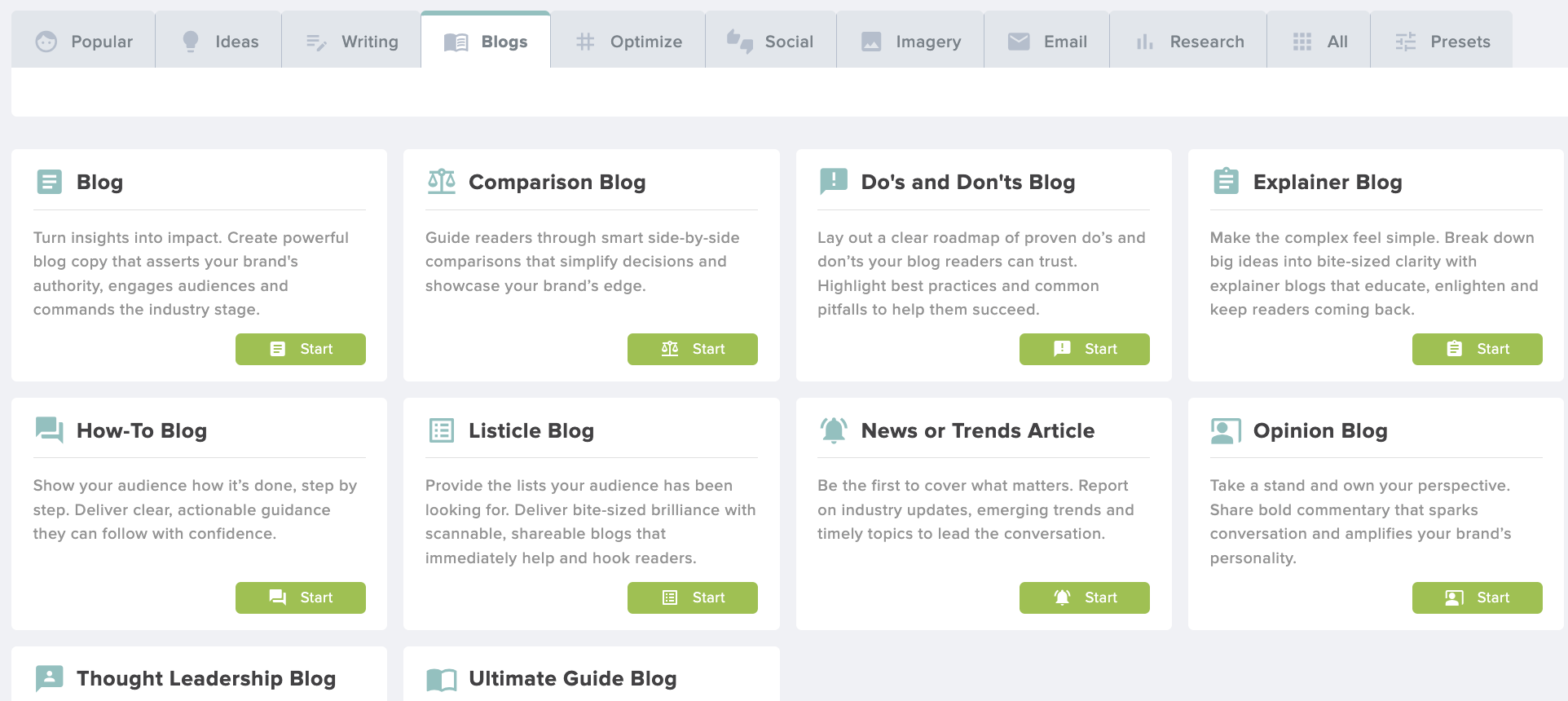
You’ll find between 5 and 15 selections for each category. Set your goals, such as ranking for a specific topic, planning content or boosting conversions, and choose the workflow/s that’ll help get you there. The direction you set here shapes everything the assistant produces downstream.
Step 3: Work With the Assistant
This phase is the most collaborative, and it usually unfolds in a few stages:
Outline First
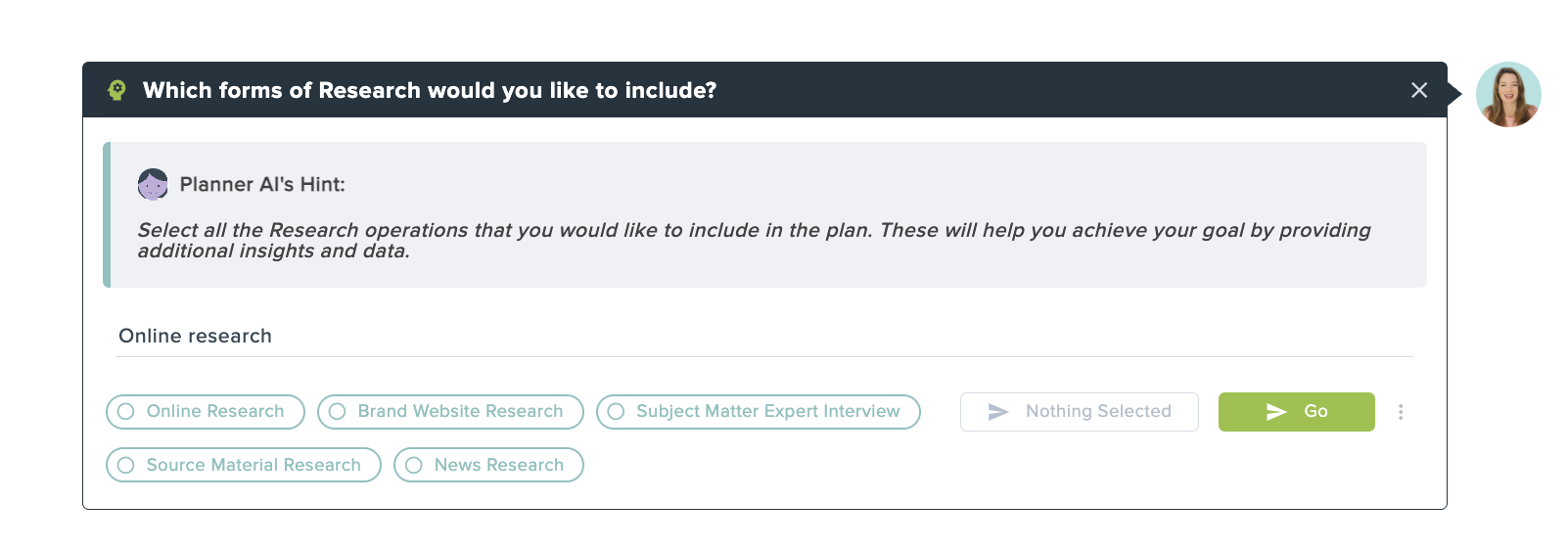
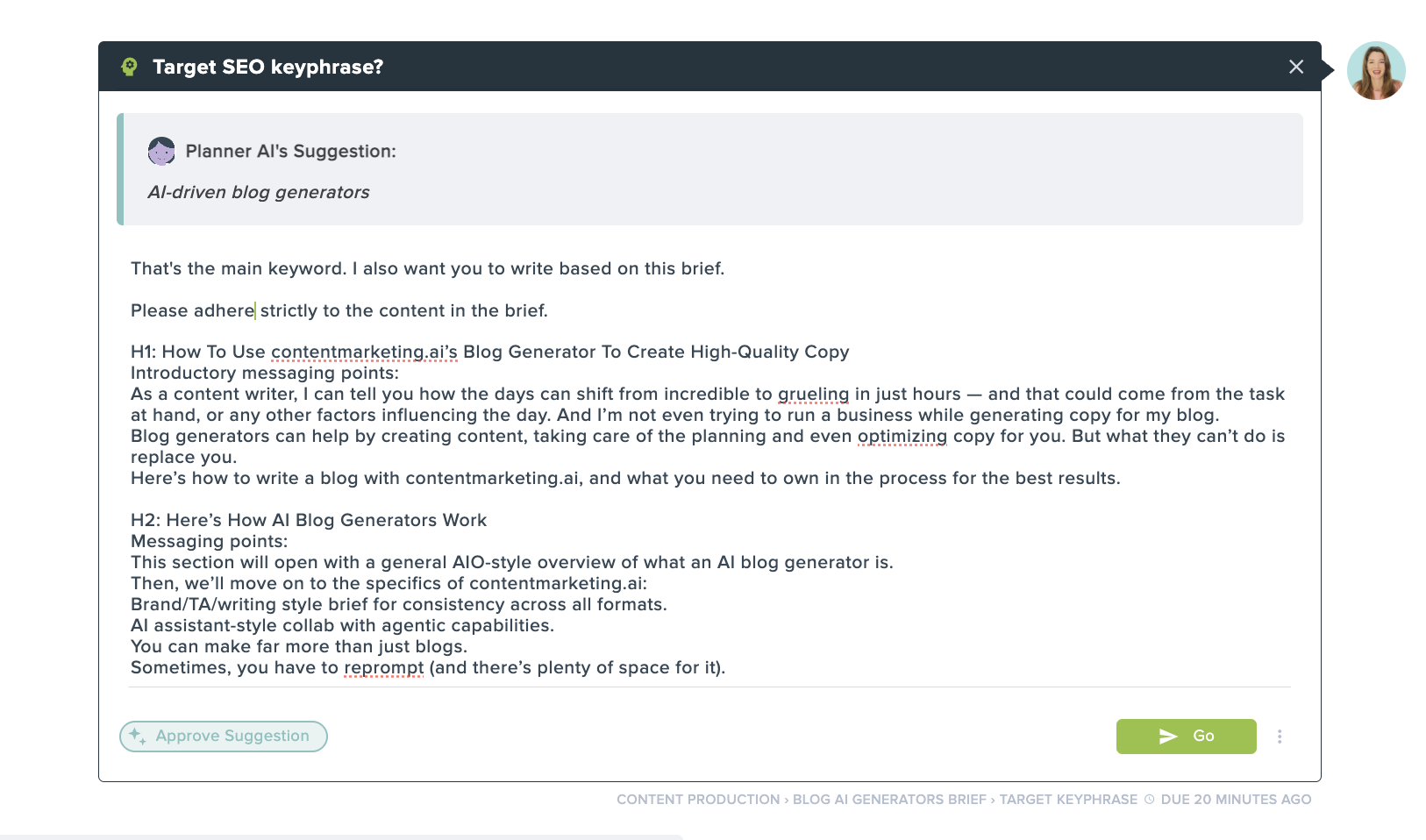
The assistant asks questions about your preferences for the primary keyword or topic, target audience (based on your brief), SEO and research. It’ll offer a proposal that you can accept conversationally or redirect as needed.
Alt: contentmarketing.ai assistants clarifying the project scope.
Draft the Copy
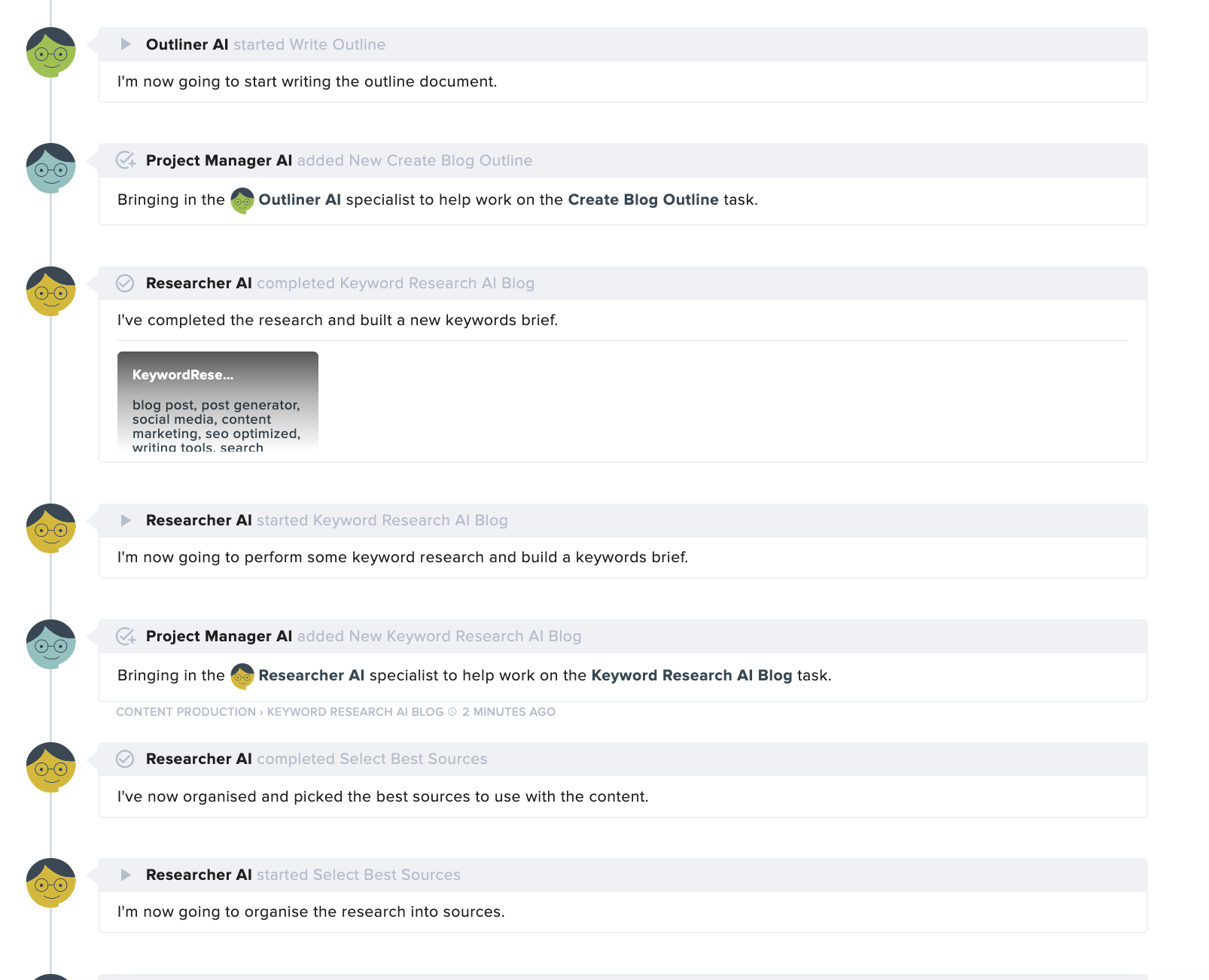
The content assistants will collaborate to write AI copy according to your specs.
Run Scans and Checks
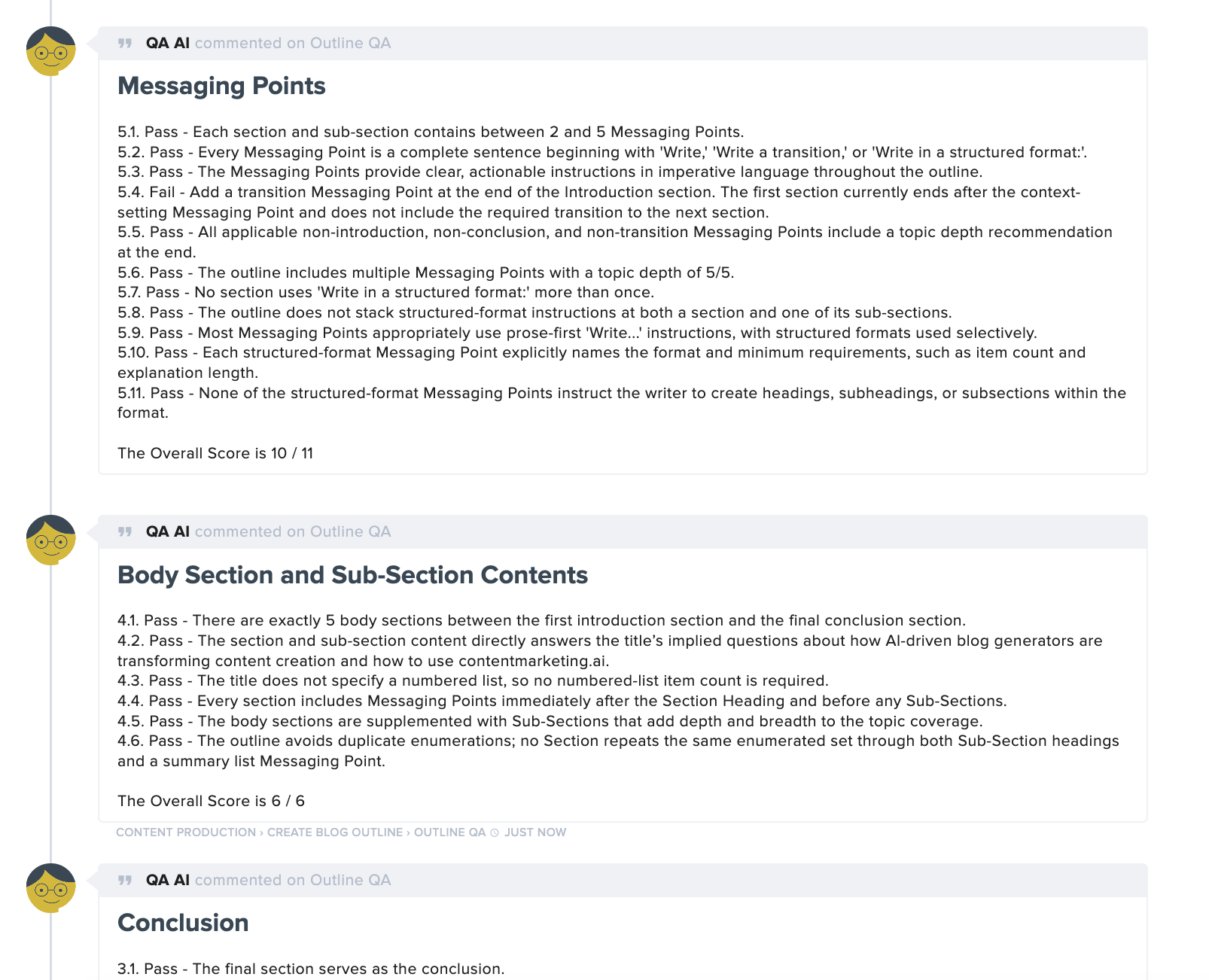
The AI assistants will check the copy against your brief and the instructions you’ve given it. If anything falls short, they’ll self-correct.
Reprompt Where Needed
Take a look at the content. If it’s on point, accept the draft. If not, push back and ask for a different angle, a sharper example or a more specific claim.
Layer in Your Own Input
Prompt the tool to add data points, quotes or anecdotes you’d like to add. This helps automate at least part of your final sweep.
Step 4: Polish Your Final Copy
Up until now, the AI has helped you to ideate, plan, research, write and optimize a draft according to your specs. You have the option to use the copy refiner tool or go straight into the human editing phase. Here’s where you’ll want to rephrase, fact-check and add your personal expertise to refine the copy and insert your value-add human touch.
To repurpose your finished blog into other formats, simply tell the assistants in the open project or type it into the conversation field on the platform’s homepage.
Keeping Your AI Content Ethical
Speed is only useful if what you’re producing is trustworthy. Here’s how to keep your AI-assisted content ethical, genuinely useful and aligned with search intent:
- Always do a final human pass: There are really no exceptions, no matter how good the draft looks on the first read.
- Treat it as a brainstorm and planning assistant, not a replacement: The AI is there to accelerate your process, not to make the decisions that require your expertise.
- Fact-check and verify everything: AI models can and do produce confident, well-formatted, entirely incorrect information. Treat every stat, claim and link as unverified until you’ve confirmed it.
- Respect intellectual property: Don’t let the tool lift phrasing, structure or ideas too closely from existing sources, yours or anyone else’s.
- Scope out bias or discrimination: Read with a critical eye for assumptions or framing that wouldn’t sit right with your target audience.
- Respect privacy and sensitive data: Never feed confidential or personally identifiable information into a prompt you wouldn’t want stored or surfaced elsewhere.
On the matter of AI detectors and plagiarism tools: you can run your content through them, and there’s no harm in doing so, but don’t lean on them too heavily. They’re inherently inconsistent and shouldn’t be treated as a substitute for human judgment, which catches what they miss.
Integrate AI Blog Generators Strategically From the Start
Using the right AI blog generator, for the right reasons and in the right ways, can streamline and scale your content marketing strategy. Without a clear grasp of what you’re using these tools for and why, from a strategic standpoint, you risk doing more harm to your strategy than good. Generic content at scale is still generic content.
The key lies in understanding which tasks belong to the AI and which belong to you. The AI can draft, structure and optimize. You bring the judgment, the voice and the facts that make it worth reading.